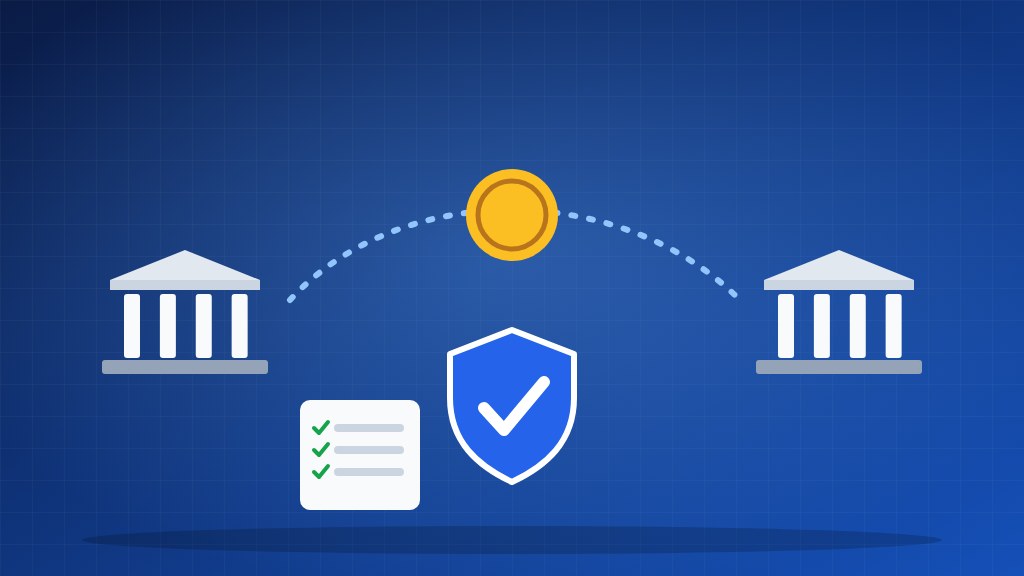
Short answer: For most production orders, you pay a supplier in China by international bank transfer, usually called a SWIFT transfer. Your bank sends instructions to the supplier's bank, and the money arrives in the beneficiary's account after a few steps. The part that goes wrong most often is not the network. It is a small mismatch in the details, such as a name that differs from the invoice, so the sensible habit is to check every detail before you send and to verify any change of details by a second channel.
This article explains the mechanics. For how to protect yourself against risky suppliers, see our guide on how to safely pay a supplier in China, and for how to think about a deposit, see paying a deposit to a Chinese supplier. The broader comparison of T/T, letters of credit and other methods is in payment terms with China suppliers.
What SWIFT actually is
SWIFT is a secure messaging network that banks use to send payment instructions to each other. It does not hold your money. When you ask your bank for an international transfer, it sends a message to the beneficiary's bank, identified by a bank code. That code is called the SWIFT code or BIC.
Sometimes the two banks have a direct relationship. Often they do not, and one or more intermediary banks pass the payment along. Each step can add time, and sometimes a fee.
The usual path of a payment
In general terms, a transfer follows these steps.
- You receive the invoice. It lists the beneficiary details and the amount due.
- You give your bank the instructions. Either through online banking or on a form, you enter the beneficiary name, account number, bank name and address, and SWIFT code, plus a payment reference.
- Your bank checks the payment. It may ask questions about the purpose or the supplier, especially for first payments.
- The payment is sent. The instructions travel through the network, possibly via an intermediary bank.
- The beneficiary's bank credits the account. It matches the name and account number against its records.
- The supplier confirms receipt. Often only after their bank has fully released the funds.
Because several parties are involved, the timing depends on cut-off times, local holidays and checks along the way. Do not assume the money will arrive on the same day you send it.
The details that must match
Before you press send, put the invoice next to the transfer form and compare each field.
- Beneficiary name. It should match the company name on the invoice and on the supplier's business details, letter for letter. A name that is similar but not identical is a warning sign to investigate, not to ignore.
- Account number. Check every digit. Read it back from the invoice instead of copying from an old message.
- Bank name and address. Make sure they belong to the same bank as the SWIFT code.
- SWIFT or BIC code. It identifies the beneficiary's bank, and a wrong character can send the payment to the wrong place.
- Currency. Confirm the currency on the invoice and the currency of the transfer. If they differ, find out who converts and at what rate.
- Reference. Use the invoice or order number so the supplier can match the payment.
A mistake in the beneficiary name is the most common cause of delay. Banks often reject or hold a payment when the name does not match the account, and a held payment can mean the factory has not started work because it has not yet seen the deposit. Production schedules usually begin from the moment the payment is confirmed, so a few days lost in the bank can become a delay in the order.
Verify the details before you pay
Bank details are the target of a well-known type of fraud: someone pretends to be your supplier and emails "updated" bank details. You can reduce that risk with a simple routine.
- Compare with what you already have. If the details on a new invoice differ from the previous ones, stop.
- Confirm by phone or video call. Speak to a contact you already know, using a number or account you already have on record. Never accept a change of bank details by email alone, and do not rely on the number or link in the email that asks for the change. This applies to every request to change payment details, whoever it appears to come from.
- Pay the company named on the contract. Be careful with a request to pay a personal account or a different company at the last minute.
- Do not hurry. Pressure to pay quickly, or to skip the check, is a reason to check more.
- Use a fixed record. Keep one agreed copy of the bank details for each supplier and compare every new invoice against it.
Fees, exchange rates and who pays
Cost is not only the amount on the invoice. A transfer can involve:
- a fee from your bank,
- a fee from an intermediary bank,
- a fee from the beneficiary's bank,
- the exchange rate your bank applies if the currencies differ.
Banks usually offer charge options that decide who bears which fees. If a supplier expects the full invoice amount to arrive, ask your bank how to make that happen, and agree beforehand with the supplier who pays what. Otherwise the amount received can be slightly less than the amount invoiced, and the supplier may wait for the difference before releasing the goods. Add bank and currency charges to your budget. They are part of the total landed cost of an order.
Deposit and balance: the general idea
Many orders are paid in two or more parts, such as a payment to start production and a payment before the goods ship. The exact structure is agreed in writing for each order, and what is reasonable depends on the product and on how well you know the supplier. Whatever the structure, treat each payment as a separate transfer with its own checks, and keep a record of each.
After you send
- Keep the confirmation. Store the transfer confirmation and reference.
- Share it. Send a copy to the supplier or your sourcing partner so the payment can be matched to your order.
- Ask for acknowledgement. Get written confirmation that the funds arrived and that production or shipment will follow the agreed schedule.
- Keep your records together. The invoice, the transfer proof and the acknowledgement belong in one place in case a question comes up.
A short checklist
- Invoice names the right company and matches your agreement.
- Bank details match your record, or you confirmed any change by phone or video call with a contact you already know.
- Name, account number, bank and SWIFT code entered exactly.
- Currency and charge option agreed.
- Reference includes the order or invoice number.
- Confirmation saved and shared.
Bottom line
A SWIFT transfer is routine when the details are right and slow when they are not. Compare the instructions with the invoice, verify any change by phone or video with a known contact, agree who pays the fees and keep the proof. Those few habits protect both your money and your production schedule.
Planning to pay for your first order? Start a quote request and ask us how payment for your order would be set up.