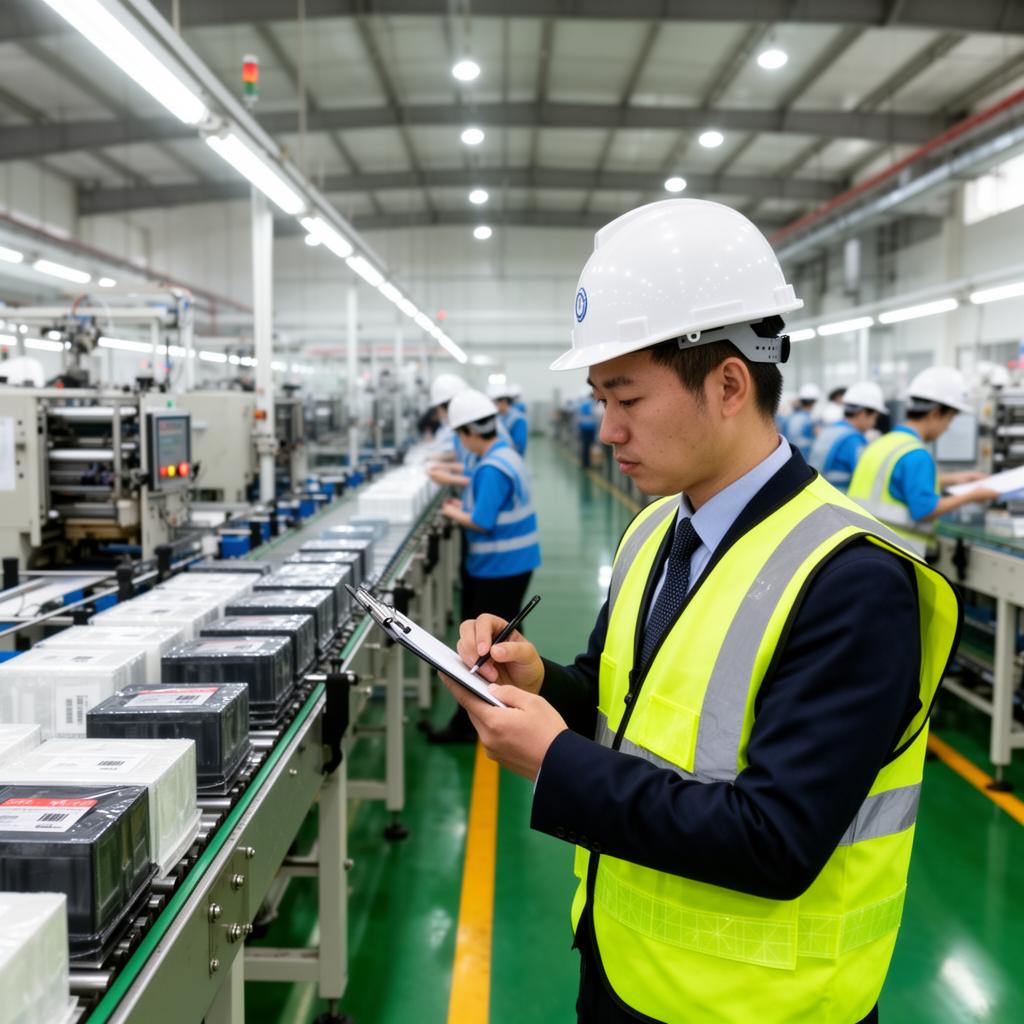
Why Visiting Your Factory Matters
Ordering products from China without visiting the factory is like buying a house without a home inspection. You might get lucky — but the odds are stacked against you.
Here's what a single factory visit can reveal:
- Whether the factory actually manufactures your product (or outsources to unknown subcontractors)
- Real production capacity vs. the inflated numbers on their Alibaba listing
- Quality control processes — or lack thereof
- Working conditions that could create compliance risks for your brand
- Negotiation leverage that saves 10-25% on unit pricing
Trade Entrust's QC team conducts 200+ factory visits per year across Guangdong, Zhejiang, Fujian, and Jiangsu provinces. This guide distills that experience into a practical preparation playbook.
---
Before You Go: Research & Documentation Checklist
Visa & Travel Documents
- M-Visa (Business): Required for most nationalities. Apply 2-3 weeks in advance.
- Invitation Letter: Your sourcing agent or the factory provides this. Trade Entrust issues these automatically for all clients.
- Travel Insurance: Essential. Include medical evacuation coverage — hospital standards vary significantly outside Tier 1 cities.
- VPN: Install before arriving. Google, WhatsApp, and most Western apps are blocked in China. Use ExpressVPN or NordVPN.
Factory Research
Before booking flights, verify these basics:
- Business License: Request a copy of their 营业执照 (Yíngyè Zhízhào). Cross-reference the registration number on the National Enterprise Credit Information System.
- Export License: Confirm they hold valid export rights — not all manufacturers do.
- Production Samples: Request 2-3 samples shipped to you before visiting. If the samples are poor, cancel the trip.
- Alibaba/Made-in-China Profile: Check their trade assurance history, transaction volume, and response rate. But don't rely on these alone.
---
What to Inspect on the Factory Floor
Walking through a factory is where theory meets reality. Here's what our QC inspectors focus on:
Production Line Check
- Raw Materials Storage: Are materials properly labeled, stored in climate-controlled areas, and organized by batch?
- Work Stations: Are workers using jigs, fixtures, and measurement tools — or eyeballing everything?
- Quality Checkpoints: Look for in-line QC stations with reject bins. No reject bins = no quality control.
- Finished Goods Area: Products should be packed, labeled, and organized. Chaos here means chaos in your shipment.
Equipment & Maintenance
- Machine Age: Modern CNC machines, injection molders, and laser cutters indicate investment in quality. Rusty, 20-year-old equipment is a red flag.
- Maintenance Logs: Ask to see them. Well-maintained machines produce consistent parts. Neglected machines produce defects.
- Calibration Certificates: Measurement instruments (calipers, gauges, CMMs) should have current calibration stickers.
Workforce & Conditions
- Worker Count: Does the actual headcount match what they claimed? A factory claiming 500 workers with only 50 visible is likely a trading company.
- Safety Equipment: Hard hats, gloves, eye protection, fire extinguishers, emergency exits. Missing? Walk away.
- Working Hours: Check time clocks or shift schedules. Excessive overtime leads to fatigued workers and higher defect rates.
---
Red Flags to Watch For
Our decade of factory audits has revealed consistent warning signs:
- "Showroom factory": A pristine front office and showroom, but they won't let you see the actual production floor. This usually means production is outsourced.
- No defect tracking: If the factory can't show you defect rates, rework logs, or customer complaint records, they aren't tracking quality.
- Pressure to sign immediately: Legitimate factories welcome due diligence. High-pressure tactics suggest they're hiding something.
- Mismatched certificates: ISO 9001 certificates with expired dates, wrong company names, or from unaccredited bodies. Verify at iso.org.
- Subcontracting without disclosure: Ask directly: "Do you subcontract any processes?" If they say no but you see products from other factories in their warehouse — that's a lie.
- No English-speaking staff: While not always a red flag, it makes ongoing communication extremely difficult without an agent. Trade Entrust provides bilingual project managers for every order.
---
How Trade Entrust Handles Factory Visits for You
Not every importer can fly to China for every order. That's why we built a 3-stage quality assurance process that replaces or supplements your physical visits:
Stage 1: Pre-Production Audit
Trade Entrust's QC team visits the factory before production begins. We verify raw materials, confirm production specs, and check equipment readiness. You receive a photo report within 24 hours.
Stage 2: In-Line Inspection
During production (typically at 30-40% completion), we conduct random sampling. This catches systemic defects early — before they multiply across your entire order.
Stage 3: Pre-Shipment Inspection
Final AQL inspection (typically AQL 2.5) on the finished batch. We check appearance, dimensions, functionality, packaging, and labeling. Products don't ship until you approve the report.
Result: Our clients see a 0.7% defect rate vs. the 8.3% industry average. That's not a typo.
---
Communication Tips & Cultural Etiquette
Business Card Protocol
- Present your card with both hands
- Accept their card with both hands, examine it briefly, then place it on the table (never in your pocket immediately)
- Have one side printed in Mandarin — this shows respect
Dining Etiquette
- Factory visits often include lunch or dinner invitations. Accept them — relationship building (关系, guānxì) is essential in Chinese business culture.
- The host orders food and pays. Don't argue about the bill.
- Toasting with baijiu (白酒) is common. It's okay to decline politely or substitute with tea.
Negotiation Style
- Chinese negotiators value long-term relationships over one-time deals. Express your interest in ongoing partnership.
- Never criticize publicly. If you find quality issues, discuss them privately with the factory owner.
- Bring a translator if your agent isn't present. Nuance matters enormously in price and terms discussions.
---
Post-Visit Action Plan
After your factory visit, execute this checklist within 48 hours (while details are fresh):
- Document everything: Organize photos by section (production line, warehouse, office). Add timestamps and notes.
- Score the factory: Use a standardized audit scorecard (Trade Entrust uses a 47-point checklist rated on a 100-point scale).
- Request samples: Order production-intent samples with your exact specifications, materials, and packaging.
- Negotiate terms: Use your visit insights as leverage. "I noticed your injection molders are running at 60% capacity — let's discuss volume pricing."
- Draft a contract: Include quality specs (AQL levels), delivery timeline, payment terms, and IP protection clauses.
- Set up communication: Establish a WeChat group with the factory owner, production manager, and your agent. Daily updates during production.
---
China vs Vietnam Factory Visits: Comparison
| Factor | China | Vietnam |
|---|---|---|
| Visa | M-Visa, 5-10 days processing | E-Visa, 3 days processing |
| Flight Cost (from US) | $800-1,500 RT | $900-1,600 RT |
| Factory Density | Extremely high (Guangdong alone has 50,000+ factories) | Growing, concentrated around HCMC and Hanoi |
| English Proficiency | Low in factories, high in trading companies | Moderate and improving |
| Product Range | Full spectrum — electronics, textiles, plastics, metals, chemicals | Strong in textiles, furniture, footwear; growing in electronics |
| Infrastructure | World-class logistics, ports, highways | Improving rapidly but still developing |
| Trade Entrust Coverage | Full service — 50+ team members, 500+ verified factories | Expanding — dedicated Vietnam sourcing desk since 2024 |
---
Ready to Visit a Factory — or Have Us Do It for You?
Whether you're planning your first trip to Guangzhou or your twentieth audit in Shenzhen, Trade Entrust's on-ground team is here to support you.
Get started in 3 steps:
- Request a free quote with your product details
- We match you with 3-5 verified factories within 3-5 days
- Choose to visit yourself (we'll arrange logistics) or let Trade Entrust's QC team handle everything
50+ full-time employees. 500+ verified factories. 200+ factory visits per year. Zero excuses for bad quality.