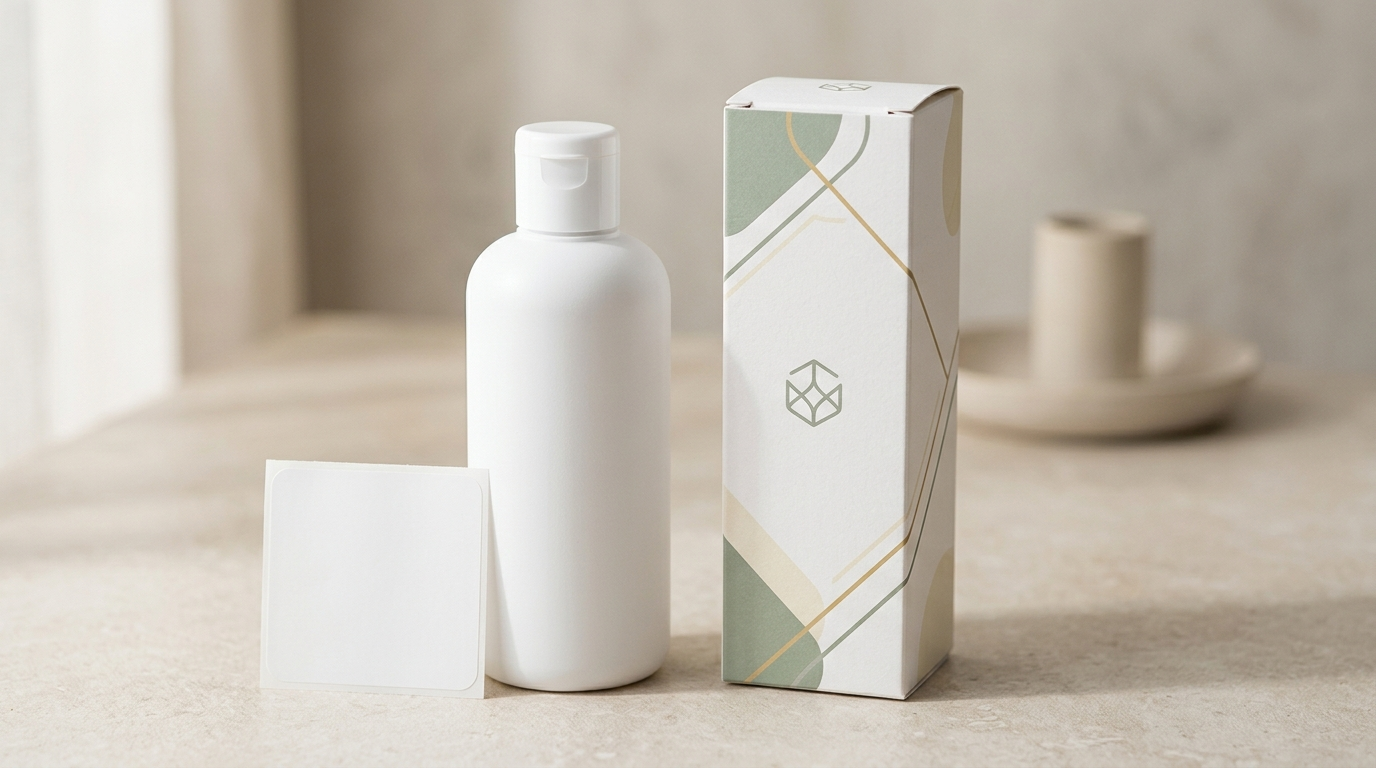
Short answer: Yes — most Chinese factories will print your logo and pack your goods in your own branded packaging, and this is exactly what private label manufacturing in China is built for. The catch is that "minimum order" is rarely one number. Your product usually has one MOQ, each branding method can carry its own minimum, and custom printed packaging almost always has a separate, sometimes higher, minimum of its own. Knowing those three numbers before you commit is what keeps your first branded order from becoming an expensive surprise.
So the real question is not "can they do it?" but "at what minimum, and who protects my brand along the way?" Here is how to answer both.
OEM vs ODM: what you can actually customize
The first thing to settle is how much of the product is truly yours. Two terms come up constantly, and the difference decides your cost, your MOQ, and your protection.
OEM (put your brand on their product) means the factory already makes a product and you brand it — you add your logo to products in China, choose colours, and drop them into your packaging. This is faster, cheaper, and lower-risk. ODM (manufacture your own design) means you bring the design or specification and the factory builds it to your drawings. This gives you a unique product but raises tooling costs, minimums, and lead time.
Understanding OEM vs ODM in China has the biggest single influence on your budget. Most first-time brand builders start with OEM and move to ODM once demand is proven.
| Factor | OEM (brand an existing product) | ODM (build your own design) |
|---|---|---|
| What you customize | Logo, colour, packaging | Product design, features, plus branding |
| Typical MOQ | Lower | Higher |
| Tooling / mould cost | Usually none | Often required |
| Lead time | Shorter | Longer |
| Product uniqueness | Shared base product | Unique to you |
| Best for | Testing a market, fast launch | A defensible, differentiated product |
If you only need your name on a proven product, OEM branded product manufacturing in China reaches the market faster and cheaper. Save ODM for when you have the sales to justify the tooling.
Logo and branding methods — and the MOQ hidden in each
"Can you add my logo?" almost always gets a yes. But how the logo is applied changes cost, appearance, durability — and yes, the minimum. Each method can carry its own MOQ, separate from the product itself.
- Pad or screen printing (silk-screen): Common for flat or curved surfaces. Low unit cost at volume, but each colour usually needs its own screen, so more colours can raise setup and minimums.
- Laser engraving: A permanent, premium mark for metal, wood, and some plastics. No ink to fade; often a per-unit or setup charge rather than a colour charge.
- Embossing / debossing: A raised or recessed impression, popular on leather, paper, and packaging. Usually needs a custom die, which sets its own minimum.
- Woven or printed labels: Standard for textiles and soft goods. Woven labels look premium but often carry their own label minimum from the label supplier, not the main factory.
- Heat transfer / stickers: Cheapest and most flexible for small runs, but least durable.
The trap is assuming one branding minimum covers everything. A factory may accept a modest product order, then tell you the custom woven label or the engraving die needs a higher quantity to be worthwhile. Ask for the MOQ of the branding method, not just the product. And confirm the mark survives real use — a logo that rubs off during shipping is the same kind of problem as material substitution and quality fade, where the first sample looks perfect and the bulk run quietly drops in quality.
Custom packaging: the hidden second MOQ
This is the surprise that catches the most brand builders. Your product has one minimum. Your custom printed packaging has another — and it is frequently the higher of the two.
Here is why. A plain polybag or a stock white box has almost no minimum. But the moment you want a custom printed colour box, a branded mailer, a printed insert, a hang tag, or a printed inner tray, you are now placing a print order. Printing has its own economics: plates, set-up, and material runs that only make sense above a certain quantity. So the custom packaging China MOQ is set by the packaging printer, not by the product factory.
A realistic pattern looks like this:
| Item | Who sets the minimum | Typical behaviour |
|---|---|---|
| The product itself | Product factory | Your base MOQ |
| Logo on the product | Factory or branding vendor | Own minimum per method |
| Plain / stock packaging | Usually none | Buy as needed |
| Custom printed box, insert, hang tag | Packaging printer | Separate, often higher minimum |
So you can happily agree a product quantity, then discover the minimum order for custom packaging is larger — meaning you either buy more boxes than products, pay a premium for a short print run, or start with simpler packaging and upgrade later. None of these is a problem if you know before you pay a deposit. The mistake is discovering the second number after the product is already in production.
> Always ask for two minimums, not one: the product MOQ and the custom packaging MOQ. They come from different suppliers and they rarely match.
If your goal is to prove the market first, it often makes sense to launch with simpler packaging and a smaller run, then commit to full custom packaging once sales justify the print minimum.
Protecting your brand at the factory
Once your logo is on the product, you have created something valuable — and something that can be copied or resold. Private label manufacturing in China works well when you protect the brand from the start.
Three protections matter most:
- Stop unauthorised resale. A factory that holds your branded goods, overruns, or rejects could resell them without your permission. Agree in writing that surplus and defective branded units are destroyed or returned, never resold, and that overruns belong to you.
- Sign an NNN agreement. For China, an NNN (Non-use, Non-disclosure, Non-circumvention) agreement is more suitable than a standard Western NDA. It restricts the factory from using your design, disclosing it, or going around you to reach your customers — and it should be enforceable in China.
- Keep ownership of your artwork and design files. Your logo files, dielines, print-ready artwork, and any product drawings are your intellectual property. State clearly that the factory may use them only for your orders and that ownership stays with you. This keeps your brand portable if you ever change suppliers.
None of this needs to be adversarial. Good factories expect these terms from serious brand owners. The absence of them is what creates risk.
How Trade Entrust handles it
Branded manufacturing is more complex than a plain order, so we manage the whole path for you:
- We map your OEM vs ODM path. We tell you honestly whether branding an existing product or building your own design fits your budget, timeline, and goals — and what each choice does to your minimums.
- We negotiate the real logo and packaging MOQs. We get every number in writing up front: product MOQ, the minimum for your chosen branding method, and the separate custom packaging minimum — so there is no hidden second MOQ after you have paid.
- We protect your brand and your artwork. We put NNN terms in place, secure ownership of your design and print files, and set rules that stop overruns or rejects being resold under your name.
- We verify the branding survives production. Through samples and pre-shipment checks, we confirm your logo, colours, and packaging on the bulk run match what you approved — not just the first sample.
Bottom line
Yes, Chinese factories can print your logo and use your own packaging — that is the core of private label manufacturing in China. Just go in knowing there is rarely a single minimum. Confirm three numbers before you commit: the product MOQ, the branding-method minimum, and the separate custom packaging MOQ. Then protect what you are building with an NNN agreement and clear ownership of your artwork. Do those two things, and a branded order becomes a real brand.
Ready to launch your brand without the MOQ surprises? Get a quote from Trade Entrust and we will map your OEM/ODM path, pin down the real logo and packaging minimums, and protect your artwork — or first see how a low-MOQ test order lets you launch small before you scale.